
Employee Evaluation Analysis
An AI-guided 360 evaluation workspace for baseball-operations staff: rough notes go in, a fair, evidence-based, rubric-grounded evaluation comes out — reviewed by you, exported as PDF or DOCX.
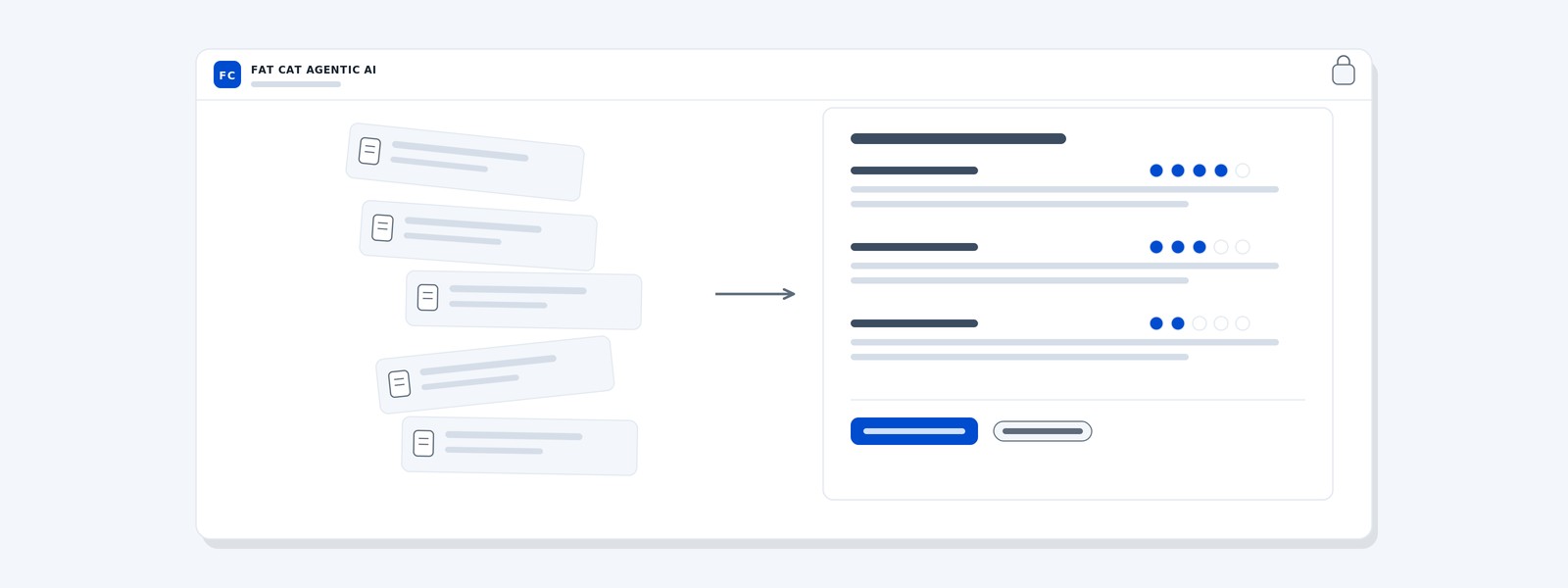
High-fidelity flat vector product mockup in enterprise SaaS marketing style: an evaluation workspace window split into two panes — the left pane a stack of rough note cards with small file icons, the right pane a polished structured evaluation document with section heading bars, small rating dots, and a royal blue (#004cce) approve button, a thin arrow flowing left pane to right. Soft pale gray (#f3f6fa) page background; white (#ffffff) panels with thin (#e3e9f1) hairline borders and very subtle drop shadows; charcoal (#16212e) primary marks; slate (#5d6b7b) secondary marks; blue used only for the button and one document section. All text as greeked placeholder bars — no legible words, letters, or numbers. Crisp straight-on geometry, generous spacing, modern and corporate, no people, no photographs What it does
Player evaluation gets decades of rigor; staff evaluation usually gets a blank form in December. This build closes that gap. It’s an AI-guided workspace that helps a baseball-operations leader turn rough, honest HR notes into a fair, evidence-based 360 evaluation for the staff of a baseball-ops department — scouts, analysts, coordinators, directors. Not players: the people who evaluate the players.
The workflow is deliberately simple. The evaluator uploads notes — files, folders, fragments written at midnight after a long trip. A chat agent reads them, confirms who is being evaluated and in what role, asks the clarifying questions a careful HR partner would ask, and drafts the full 360 section by section. The evaluator reviews everything in a live preview pane, edits what needs editing, and exports a finished, branded document as PDF or DOCX.
Two design decisions matter most. First, the system is closed-loop: during an evaluation the AI is grounded exclusively in a curated internal source library — competencies, rubrics, structured questions, guardrail rules — plus the evaluator’s own uploads and answers. It reads nothing from the open web. Second, every claim in a draft is tracked back to the note or answer that supports it, with guardrail checks that flag unsupported assertions before a human ever signs the document. Full audit logs and an administrative dashboard come standard.
Who it’s for
VPs and directors of baseball operations, scouting directors with large field staffs, and any sports organization that wants staff reviews to meet the same evidentiary standard as its player evaluations. The design is organization-agnostic — the rubric library is the part we tailor to you.
The quantitative methods
Structured claim extraction from unstructured notes; rubric- and competency-grounded generation with guardrail validation; natural-language processing for evidence linkage; and audit-trail instrumentation throughout. The AI drafts; the library constrains; the human decides.
Example outcomes
Representative outcomes: evaluation cycles that take hours instead of weeks; reviews that read consistently across departments because they share one rubric spine; documentation an organization can stand behind, with every judgment traceable to evidence; and — quietly the most valuable — harder conversations made easier because the document arrives fair.
From sample to engagement
An engagement starts with the rubric library: we encode your competencies, your department structures, and your evaluation philosophy into the curated source library that grounds every draft. The PoC proves the loop on a handful of real evaluations; the MVP rolls it out across a department with exports, audit trails, and admin visibility configured to your governance.
Related sample builds
Prospect Board Prediction
An interactive what-if draft board: a deterministic model ranks prospects from internal, external, and ball-tracking evidence, and staff move the weights to see how the board reorders.
Learn more → Contracts & valuationPlayer Contract Modeling
An agentic contract advisor for front offices: plain-English questions, numbers-first answers on draft bonuses and pro deals, grounded in a normalized contract database with comps and evidence.
Learn more →